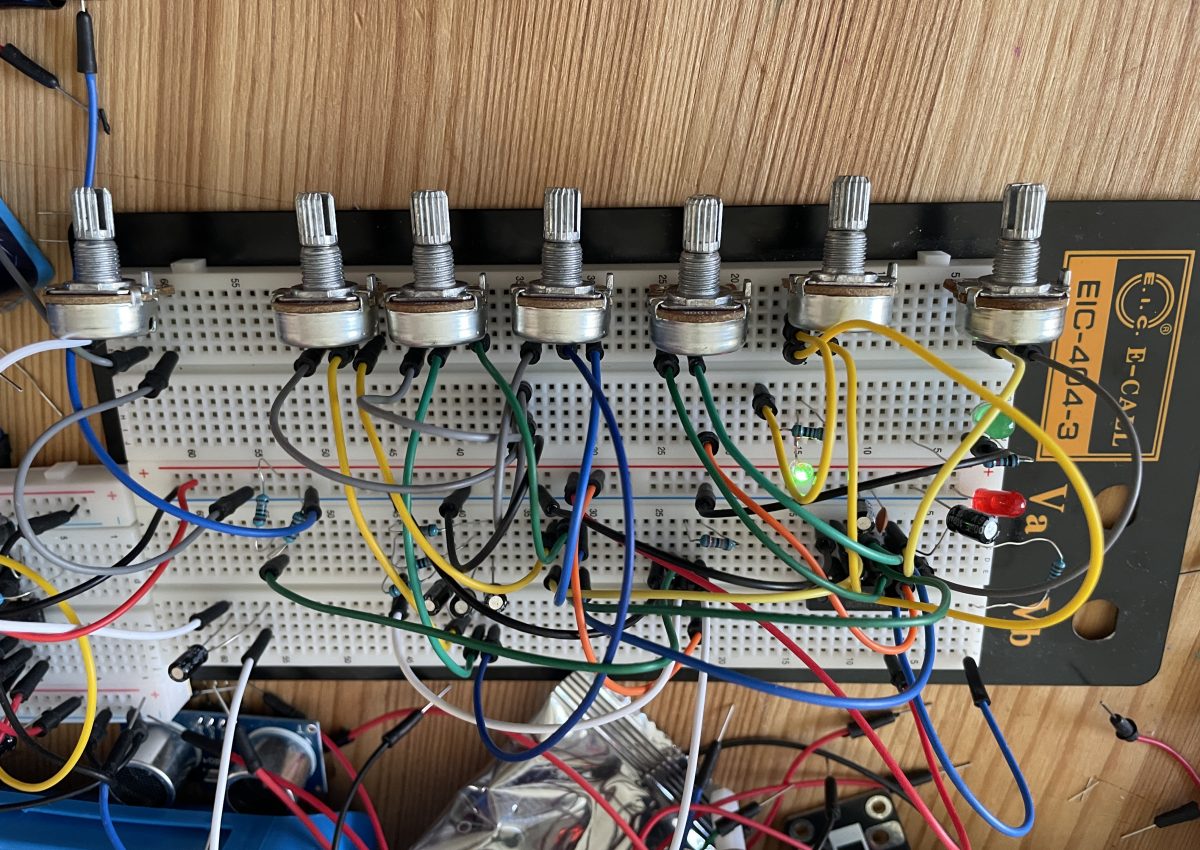
Body · Sound · Technology · Perception
For me, sound is more than music. It is movement, perception, energy, body, space, and connection.
KlangLog is an ongoing space for thoughts, experiments, discoveries, and reflections on electronic sound, embodied interaction, improvisation, and the relationship between body, technology, and environment.
I explore how technology can become an extension of the body — not simply a tool for controlling sound, but an interface through which movement, gesture, tension, and presence become sound.
Sensors, modular systems, and experimental instruments allow me to blur the boundaries between playing, moving, listening, and interacting. Sometimes movement becomes modulation. Sometimes the body becomes an instrument. Sometimes the system behaves in ways I did not expect — and that is where the interesting things begin.
KlangLog documents this process: the experiments that work, the ones that fail, unexpected discoveries, emerging questions, and the ideas that grow from them.
A space between sound and body, technology and perception, control and unpredictability.
First Live Test: When the Modular System Meets the Stage
25 July 2026 · Live performance / Modular system / Hybrid setup
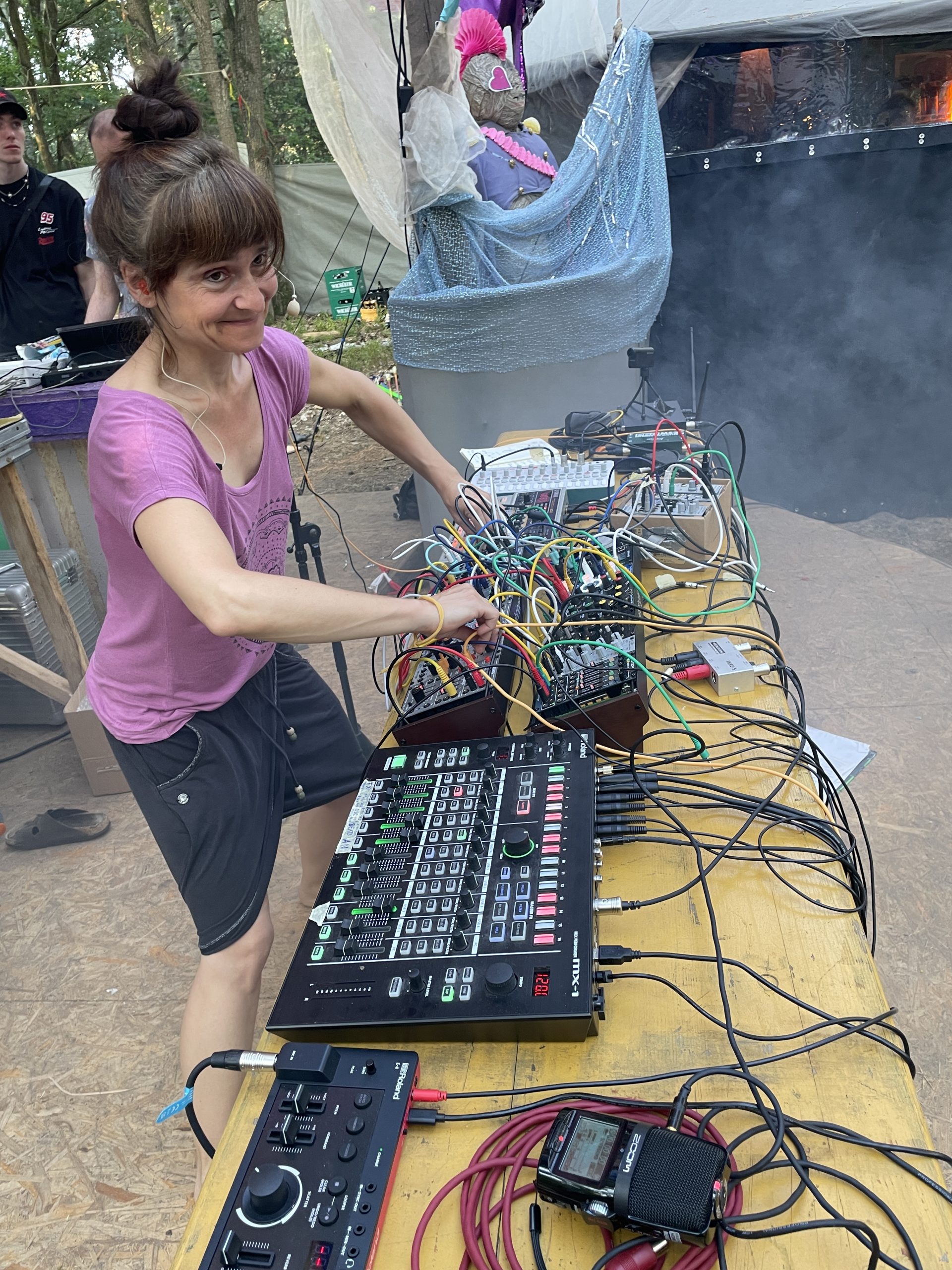
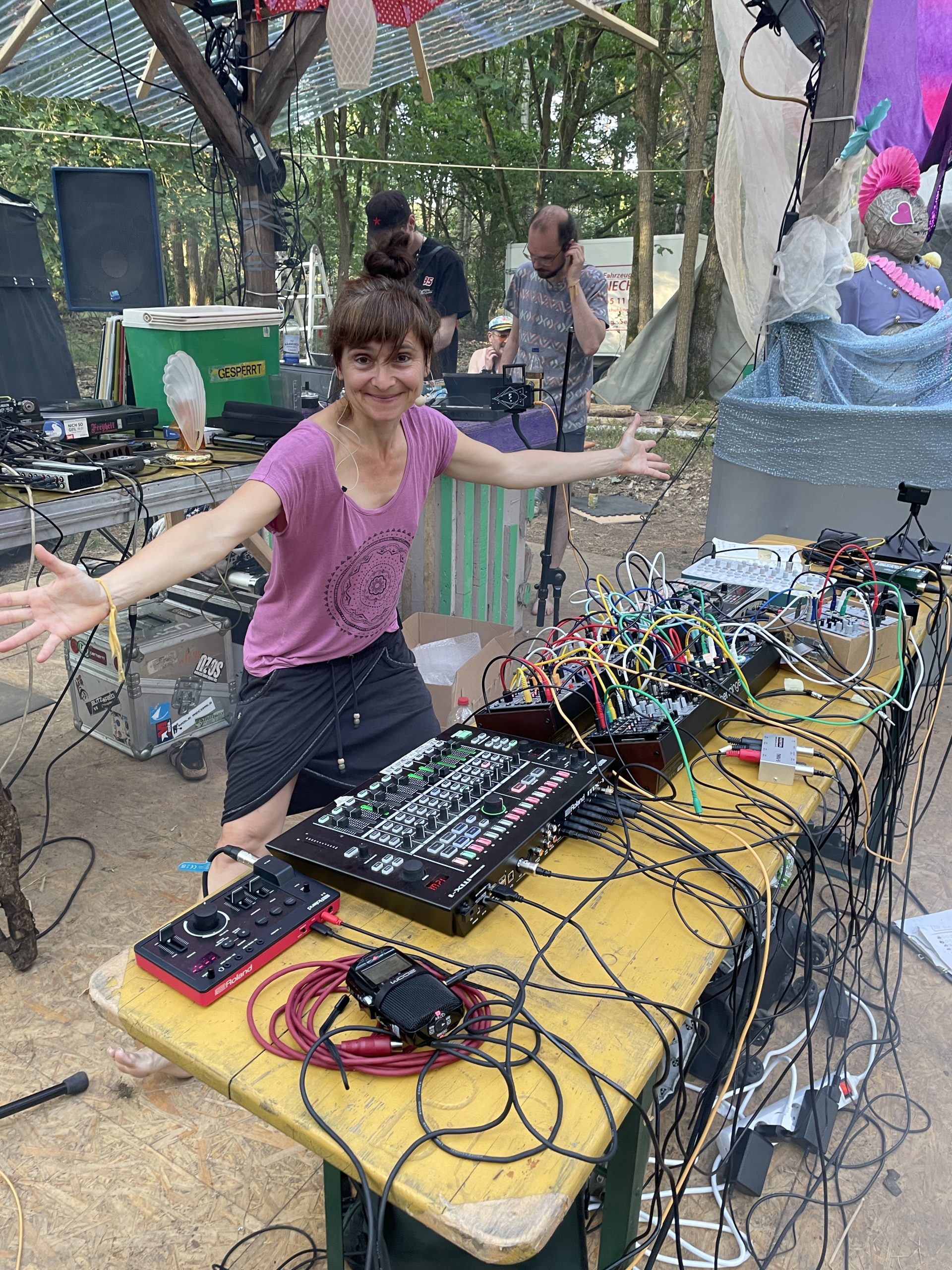
My first full live performance with the hybrid setup became a real-world stress test for the system. After one hour on stage, I came away with a much clearer idea of what needs to change. The current setup took around 1.5 hours to build and about 45 minutes to dismantle — far too much time for a live performance. A proper mobile case with the basic connections already prepared will therefore become essential. But the bigger challenge was the system’s instability. Changing a channel level on the mixer could suddenly cause extreme frequency jumps — sometimes by one or two octaves. In a live situation, this can completely throw off the tuning and leave no room to move lower with the oscillators. Precise tuning is already difficult enough under performance conditions; unpredictable octave shifts are a serious problem. So the next experiments are becoming very practical:
How can I make the system faster to set up, more stable in performance, and easier to tune on the fly? A fast way of re-tuning the oscillators — ideally almost at the push of a button — is now high on the list. At the same time, I need to rethink how the sensors are physically integrated: enough freedom of movement to make the performance embodied, while keeping the modular controls and signal paths immediately accessible.
The first live test did exactly what it was supposed to do: it exposed the weak points. Now I know what to work on next.
Modular Systems & Improvisation
To me, the modular system almost feels like an instrument that was designed for improvisation from the very beginning. Unlike many other electronic instruments or digital production environments, it doesn’t really have stability in the traditional sense. Sound doesn’t exist as a reproducible preset or a saved file — it only exists in the specific moment of a particular configuration. Every connection, every tiny adjustment of a knob, every modulation immediately changes the sonic structure that emerges.
Because of that, the modular system carries a kind of inherent ephemerality. Even if a patch is recreated, it is never completely identical or fully reproducible. The huge amount of tiny parameters and their constant interactions create a system of permanent transformation. And that is exactly what fascinates me about it: the instrument partly escapes total control.
For me, modular systems and improvisation are therefore not separate things, but deeply connected — almost like a couple. The real question is not whether improvisation happens, but rather how improvisation manifests aesthetically and what kind of artistic relationship one has to sound and composition.
In my own artistic practice, working with modular systems allows me to consciously break away from fixed compositional structures and traditional song formats that shaped my musical work for a long time. At the same time, the instrument confronts me with an inner tension: the desire to create order, to find structure within chaos, and to make sonic processes controllable.
That desire does not disappear within improvisation. Instead, it remains as a constant movement between openness and control. And this is exactly where sensors and embodied interaction become essential parts of my work.
Through body-based control systems, an additional layer of sonic organization emerges. Movement, touch, spatial position, or physical tension become musical parameters that directly influence the behavior of the modular system. In this process, the body is not just a trigger, but an active shaping force within a dynamic sonic environment.
This creates a very special energy for me: on one hand, the modular system helps me break away from fixed musical structures and habitual ways of thinking. On the other hand, bodily interaction and sensor-based control allow me to respond to the system’s inherent unpredictability by creating new forms of structure within it.
But this structure no longer exists as a static composition. Instead, it emerges as an interactive process. Sound develops in real time through the interplay of different parameters, instruments, movements, and sensor-based influences. Especially in works such as Resonance Fractures, the modular system becomes not only an instrument itself, but part of a larger network of embodied sound creation, where different forms of body-based sonic generation intertwine.
In this context, improvisation does not mean randomness or chaos. It becomes a continuous negotiation between control and loss of control, between structure and openness, between body, machine, and sound.
Körper · Klang · Technologie · Wahrnehmung
Klang war für mich nie nur Musik. Klang ist Bewegung, Wahrnehmung, Energie, Körper, Raum und Verbindung.
Der „KlangLog“ ist ein Ort für Gedanken, Experimente und Reflexionen rund um elektronische Klangerzeugung, verkörperte Wahrnehmung, Improvisation, Sensorik und die Beziehung zwischen Mensch, Technologie und Umwelt.
Was mich besonders fasziniert, ist die Möglichkeit, technologische Klangerzeugung nicht nur als Werkzeug zu verwenden, sondern als Erweiterung des Körpers selbst. Der Körper wird dabei zu einer Art Interface – zu einem Instrument, das Klang nicht nur kontrolliert, sondern durch Bewegung, Spannung, Gestik und Präsenz materialisiert und erfahrbar macht.
Nachdem mein musikalisches Arbeiten lange stark an klassische Instrumente und kontrollierte Spielweisen gebunden war, entstand über die Jahre zunehmend der Wunsch, mich davon zu lösen. Nicht mehr stillstehend Klang zu produzieren, sondern Klang durch Bewegung entstehen zu lassen. Den Körper selbst wie einen Stift oder ein malerisches Werkzeug zu nutzen, das Klangräume formt.
Dadurch rückten insbesondere elektronische und digitale Klangerzeugungsmöglichkeiten in den Mittelpunkt meiner künstlerischen Forschung – und vor allem die Frage, wie diese körperlich erfahrbar und ausdrückbar gemacht werden können.
Sensoren nehmen dabei für mich eine besondere Rolle ein. Sie bilden die Schnittstelle zwischen generierten, virtuellen Klangwelten und dem physischen Körper im Hier und Jetzt. Bewegung wird Klang. Spannung wird Modulation. Körperlichkeit wird zu einem unmittelbaren Teil der Komposition.
Gerade in dieser Verbindung aus digitaler Technologie und physischer Präsenz entsteht für mich eine besondere Form von Magie: Etwas Unsichtbares, Virtuelles und nicht Greifbares wird durch den Körper plötzlich spürbar, hörbar und räumlich erfahrbar.
Improvisation und Experiment sind dabei zentrale Bestandteile meiner Arbeit. Sie ermöglichen einen offenen Prozess, in dem Klang nicht vollständig geplant, sondern im Moment erlebt, geformt und transformiert wird. Dabei entsteht immer auch eine Beziehung zur Umgebung, zum Raum, zu den anwesenden Menschen und zur jeweiligen energetischen Situation.
Mich interessiert besonders, wie trotz zunehmender Digitalisierung neue Formen von Verkörperung und Präsenz entstehen können. Wie Technologie nicht zur Entfernung vom Körper führt, sondern im Gegenteil neue Verbindungen zwischen digitaler und physischer Erfahrung schafft.
Gerade im Zusammenspiel von Sensorik, Modularsystemen, improvisativer Praxis und verkörperter Interaktion sehe ich ein enormes Potenzial: für neue Formen der Klangkunst, für partizipative Erfahrungen, für Wahrnehmungsexperimente und für Räume des Austauschs zwischen Individuum, Gesellschaft, Technologie und emotionaler Erfahrung.
Der „KlangLog“ sammelt Gedanken, Fragmente, Prozesse und künstlerische Untersuchungen aus genau diesem Spannungsfeld.
Modularsysteme und Improvisation
Das Modularsystem erscheint für mich beinahe wie ein Instrument, das von Grund auf für Improvisation geschaffen wurde. Anders als viele andere elektronische Instrumente oder digitale Produktionsumgebungen besitzt es keine wirkliche Stabilität im klassischen Sinne. Klang entsteht nicht als reproduzierbares Preset oder gespeicherte Datei, sondern ausschließlich im jeweiligen Moment einer spezifischen Konfiguration. Jede Verbindung, jede minimale Veränderung eines Reglers, jede Modulation beeinflusst das entstehende Klanggefüge unmittelbar.
Dadurch trägt das Modularsystem eine grundsätzliche Flüchtigkeit in sich. Selbst wenn ein Patch rekonstruiert wird, bleibt er niemals vollkommen identisch reproduzierbar. Die Vielzahl feinster Parameter und deren gegenseitige Wechselwirkungen erzeugen ein System permanenter Veränderung. Genau darin liegt für mich seine besondere Qualität: Das Instrument entzieht sich bis zu einem gewissen Grad der vollständigen Kontrolle.
Modularsystem und Improvisation bilden deshalb für mich keine getrennten Bereiche, sondern vielmehr ein zusammengehöriges Paar – beinahe ein „Couple“. Die Frage ist nicht primär, ob improvisiert wird, sondern vielmehr, wie sich Improvisation ästhetisch manifestiert und welchen Anspruch man an die eigene Klanggestaltung stellt.
In meiner eigenen künstlerischen Praxis ermöglicht mir das Arbeiten mit Modularsystemen ein bewusstes Loslösen von festen kompositorischen Strukturen und klassischen Songformaten, die mein musikalisches Arbeiten lange geprägt haben. Gleichzeitig konfrontiert mich das Instrument mit einem inneren Spannungsverhältnis: dem Wunsch, Ordnung zu schaffen, Struktur im Chaos zu finden und klangliche Prozesse kontrollierbar zu machen.
Dieses Bedürfnis verschwindet auch innerhalb improvisativer Prozesse nicht. Vielmehr bleibt es als permanente Bewegung zwischen Offenheit und Kontrolle bestehen. Genau an diesem Punkt werden Sensoren und verkörperte Interaktion für mich zu einem entscheidenden Bestandteil meiner Arbeit.
Durch körperbasierte Steuerungssysteme entsteht eine zusätzliche Ebene der Klangorganisation. Bewegung, Berührung, räumliche Position oder physische Spannung werden zu musikalischen Parametern und greifen direkt in das Verhalten des Modularsystems ein. Der Körper fungiert dabei nicht nur als Auslöser, sondern als formgebende Instanz innerhalb eines dynamischen Klangsystems.
Für mich entsteht daraus eine besondere Energie: Einerseits unterstützt mich das Modularsystem dabei, mich von festen musikalischen Denk- und Strukturmustern zu lösen. Andererseits ermöglichen körperliche Interaktion und sensorische Steuerung, dem inhärent Unvorhersehbaren des Systems neue Formen von Struktur entgegenzusetzen.
Diese Struktur entsteht jedoch nicht mehr als statische Komposition, sondern als interaktiver Prozess. Klang entwickelt sich in Echtzeit aus dem Zusammenspiel unterschiedlichster Parameter, Instrumente, Bewegungen und sensorischer Einflüsse. Besonders in Arbeiten wie Resonant Fractures wird das Modularsystem dadurch nicht nur zu einem eigenständigen Instrument, sondern zu einem Teil eines komplexen Netzwerks verkörperter Klangkreation, in dem verschiedenste Formen körperbasierter Klangerzeugung miteinander verwoben sind.
Improvisation bedeutet in diesem Kontext daher nicht Beliebigkeit oder Chaos, sondern die permanente Aushandlung zwischen Kontrolle und Kontrollverlust, zwischen Struktur und Offenheit, zwischen Körper, Maschine und Klang.